Model: GW - Policy Exposure
The GW - Policy Exposure model includes annualized policy exposure measures, such as in-force written, earned, and unearned. Analysts can view exposure through two distinct time lenses: For monthly balances, certain metrics are pinned to a single "snapshot month." For analyzing movement and trends, some metrics accumulate over effective periods.
Source tables
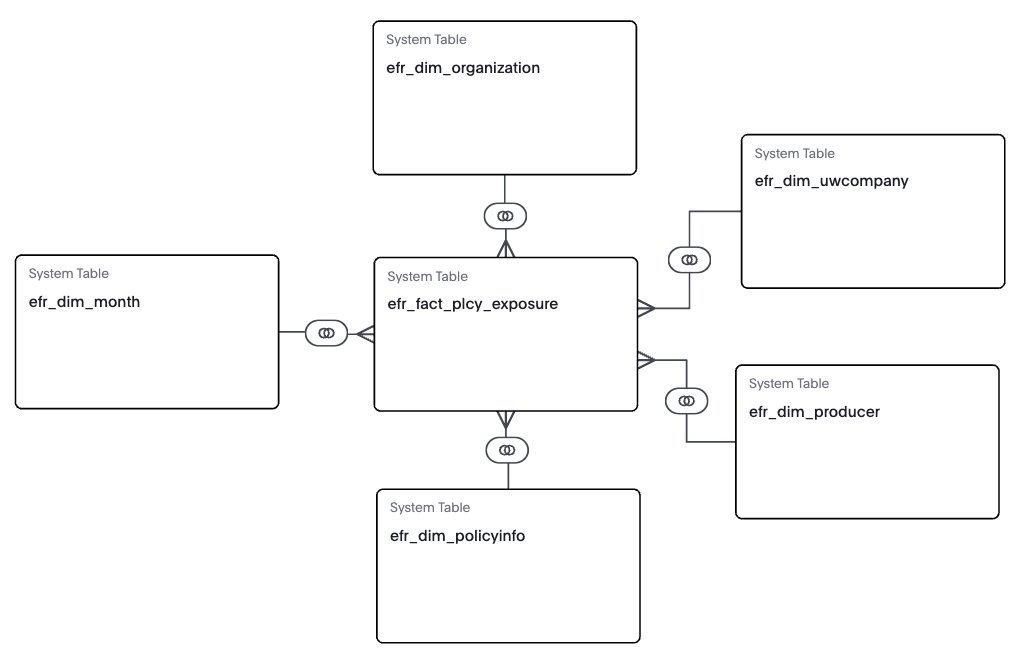
The GW- Policy Exposure model is built from a fact table and multiple dimension tables, as shown in the diagram.
Fact:
efr_fact_plcy_exposure
Dimensions:
efr_dim_monthefr_dim_policyinfoefr_dim_uwcompanyefr_dim_organizationefr_dim_producer
From each table, Guidewire selected specific columns to include in the model. They’re typical columns used in reporting and analysis. For details about each column in the model, see the Data dictionaries for Explore models.
Annualized exposure units
The model measures exposure in annualized exposure units, such as policy-years or
car-years. You can sum units across policies and months to form meaningful portfolio
totals. For example:
- Full annual policy: +1.0 unit
- Six-month policy: +0.5 unit
- Cancellation subtracts the remaining exposure: -0.4 unit
- Reinstatement adds back the remaining exposure: +0.4 unit
Time lenses
Each metric in the model belongs to one of the following time lenses:
- The
Snapshot Monthparameter drives metrics about one point in time. For example, when you use theInforce Written Exposurecolumn in a visualization, also include theSnapshot Monthparameter so that users can select which month to analyze. - The
Effective Periodcolumn drives other metrics that accumulate over multiple months.