Model: GW - Cash Balancing
The GW - Cash Balancing model includes monthly aggregates of billing transactions that affect cash or cash held in a pending state. Analysts can use it to create visualizations of cash amounts by month, transaction subtype, product, producer, and other attributes.
Source tables
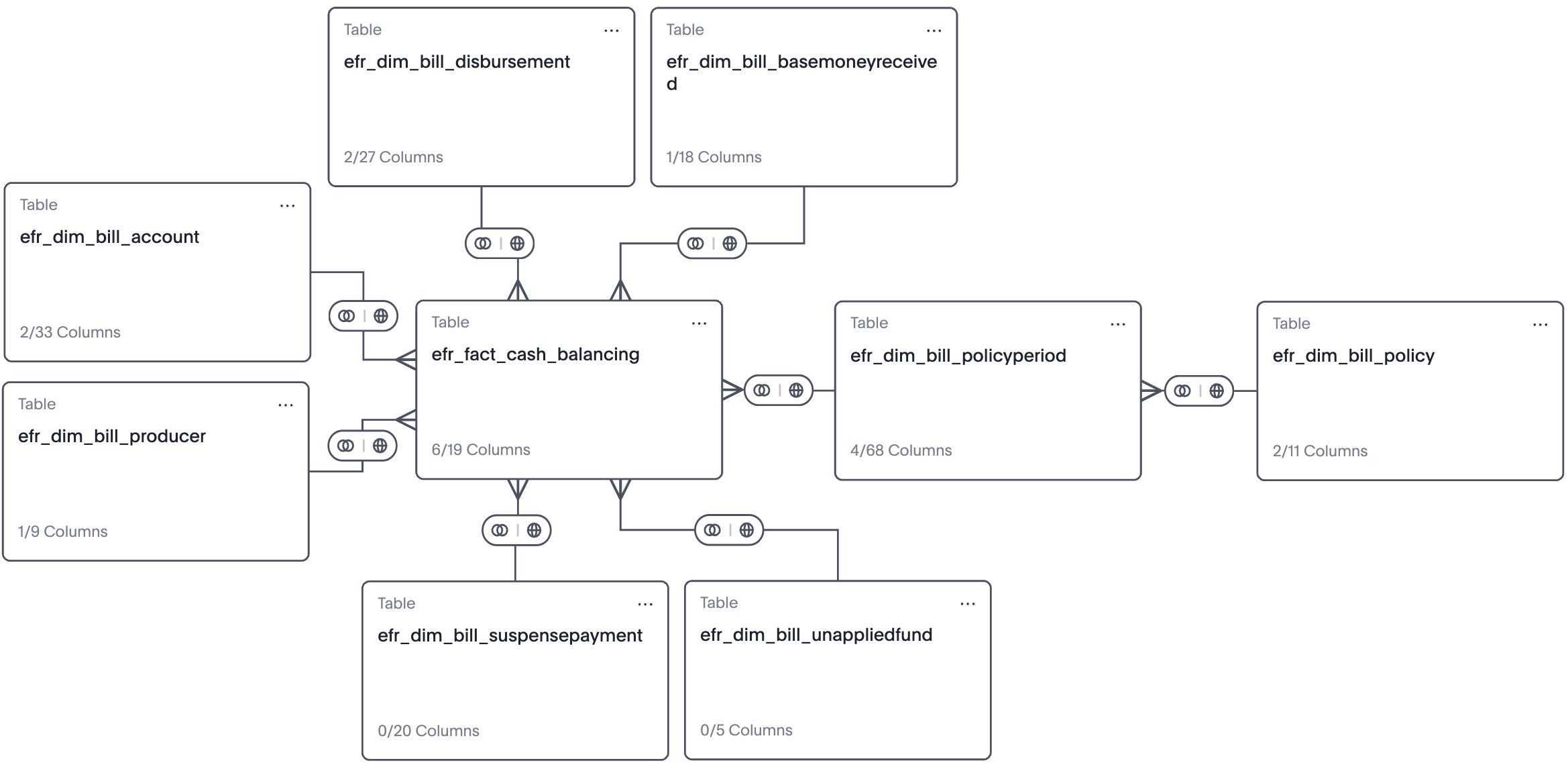
The GW - Cash Balancing model is built from a fact table and multiple dimension tables, as shown in the diagram.
efr_fact_cash_balancing
efr_dim_bill_unappliedfundefr_dim_bill_disbursementefr_dim_bill_suspensepaymentefr_dim_bill_basemoneyreceivedefr_dim_bill_accountefr_dim_bill_producerefr_dim_bill_policyperiodefr_dim_bill_policy
From each table, Guidewire selected specific columns to include in the model. They’re typical columns used in reporting and analysis. For details about each column in the model, see the Data dictionaries for Explore models.
Line item aggregates
The model includes monthly aggregates for various line item amounts, such as cash, collateral held, and unapplied.
Cash balancing formulas
The model includes formulas that summarize how cash moves through the billing system each month, including cash paid out, cash received, and the resulting net cash position. These formulas also capture producer-related cash flows and suspense activity.